
Beyond Caffeine: The Emotional Blueprint Behind Spacegoods’ Ads
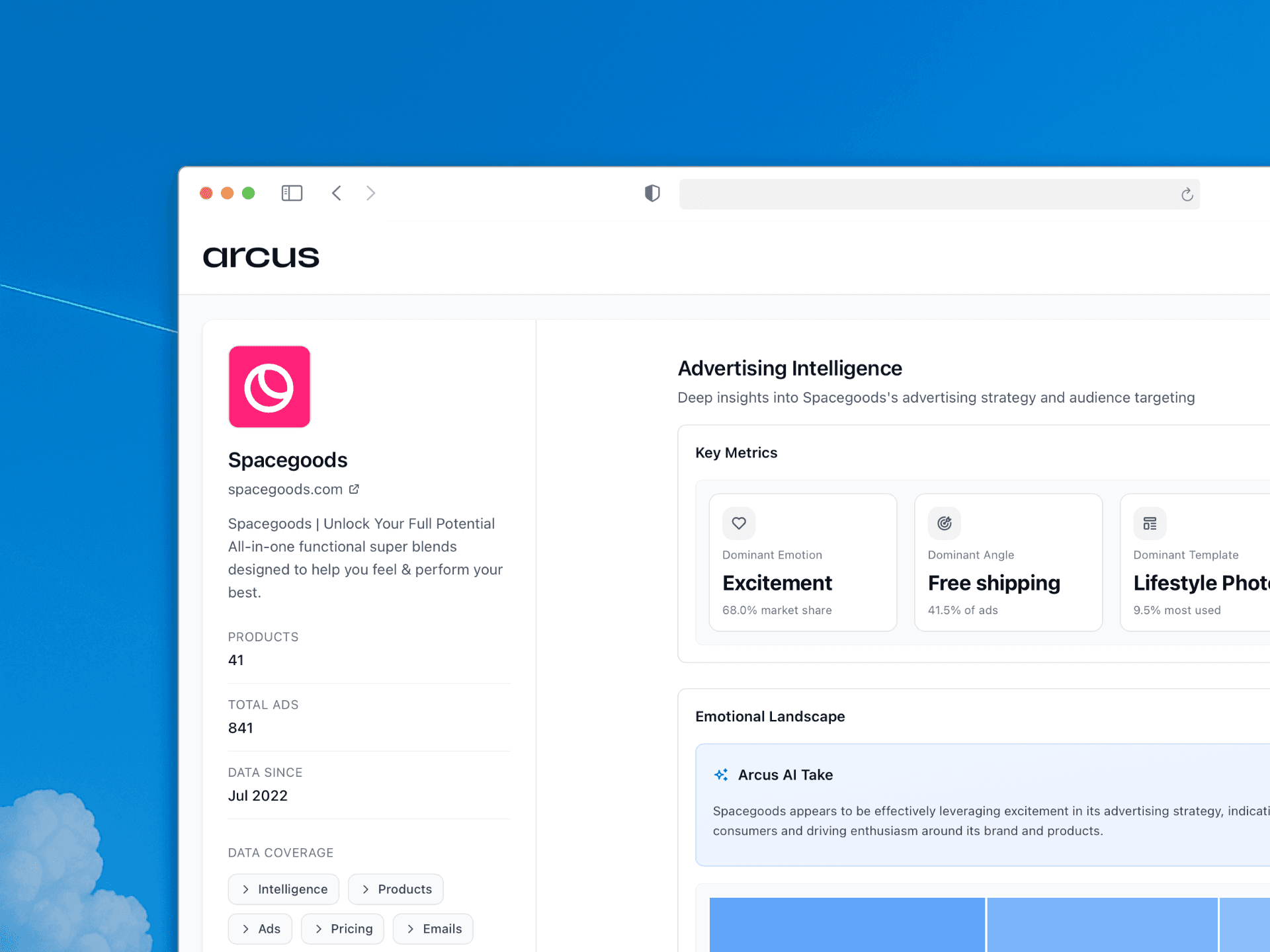
We Analyzed 841 Spacegoods Ads — Here’s What We Found
If you’ve been in e-commerce lately, you’ve seen Spacegoods.
Bright colors, dopamine branding, and a founder who gets how to sell energy.
But what’s really behind the ads that built one of the UK’s fastest-growing DTC brands?
We analyzed 841 of their ads using Arcus, our competitor research tool for e-commerce, to see what makes their strategy work — and where the next opportunities lie.
The Emotion That Powers Their Growth
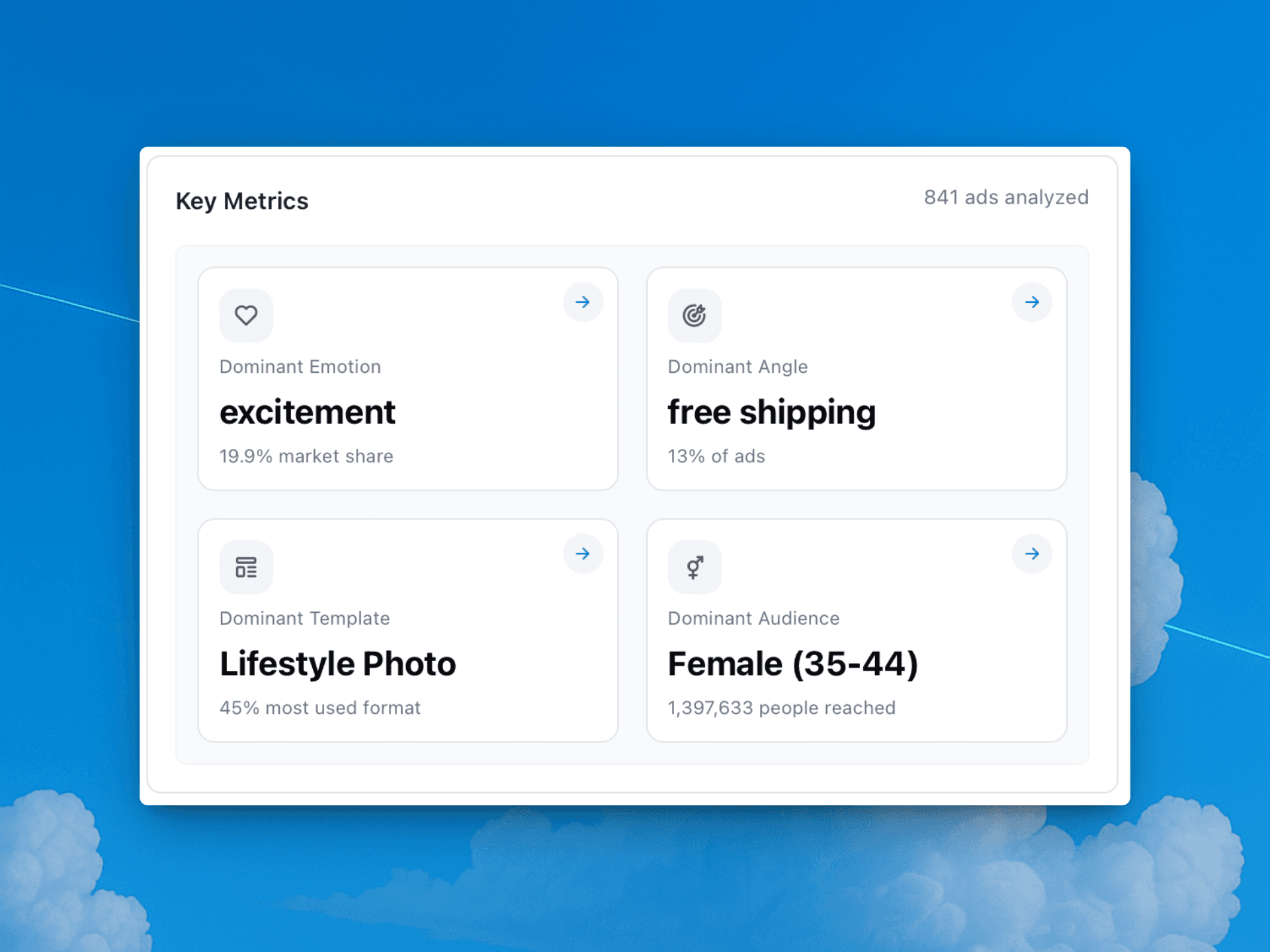
When you look at Spacegoods’ creative strategy, one thing jumps out immediately: excitement.
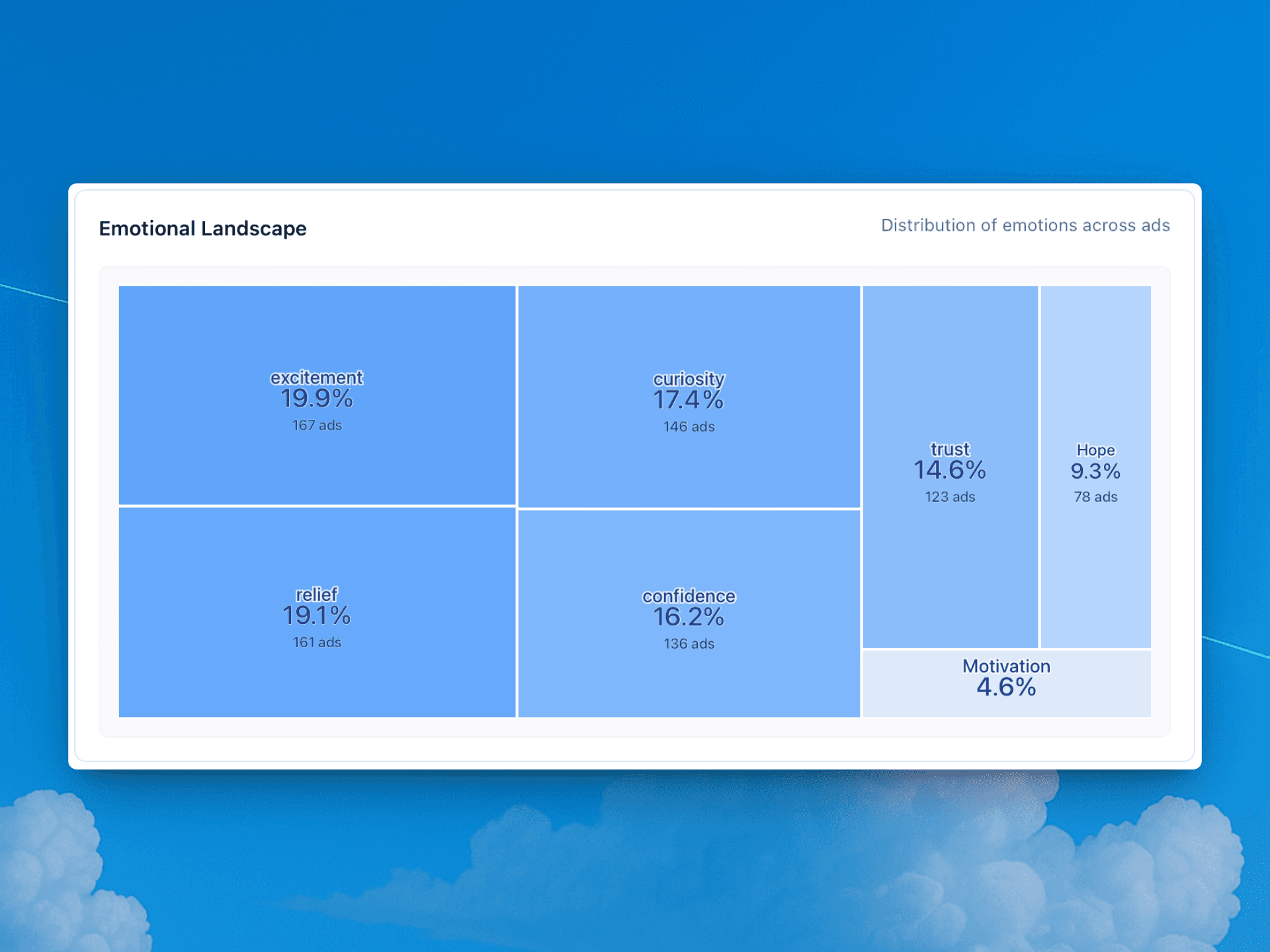
Nearly one in five of their ads is designed to spark it.
Everything — from the fast cuts and bold colors to the phrasing “Feel incredible, every morning” — creates a high-energy feedback loop.
It’s emotion-led marketing that sells a feeling before a product.
But what’s even more interesting is what’s missing: emotions like relief and curiosity that could help the brand evolve.
Imagine ads that speak to calm after burnout, or curiosity around the science behind dopamine.
That’s where Spacegoods could add new emotional depth without losing its identity.
What Their Ads Get Right
While excitement dominates, two other emotions — relief (19.1%) and curiosity (17.4%) — show strong potential.
Relief-driven messaging could help Spacegoods position itself as a solution (“no more crashes,” “no jitters”), while curiosity could fuel scroll-stopping hooks (“What happens when you replace caffeine with dopamine?”).
Brands often over-index on hype, but balancing excitement with curiosity and empathy creates longevity.
Emotionally intelligent marketing isn’t just loud — it’s layered. Check it out here.
Who They’re Really Reaching
Arcus’ audience analysis revealed that Spacegoods isn’t just for the youngest or trendiest crowd.
Their strongest engagement actually comes from consistency seekers — people looking to feel sharper, calmer, more balanced day-to-day.
The takeaway? Their brand isn’t about age or demo — it’s about state of mind.
That’s the power of emotion-first marketing: it transcends targeting boxes and builds genuine resonance.
What Other Brands Can Learn
Spacegoods’ ads remind us of something simple:
The best-performing creative doesn’t just describe a product — it triggers a feeling.
Using Arcus as a research tool for e-commerce, we’ve seen this pattern repeat across top DTC brands.
The brands that win aren’t the ones running the most ads; they’re the ones that understand their buyer personas emotionally, not demographically.
That’s how you move from “attention” to affinity.
Spacegoods sells dopamine, but what they’re really selling is momentum.
And if more e-commerce brands studied the why behind their competitors’ success — not just the what — their marketing would feel a lot more human.
Because in 2025, the smartest growth strategies aren’t algorithmic.
They’re emotional.